"The base restaurant and facilities were excellent. Warm, modern and comfortable. Our summit stargazing experience was in early spring so weather was still cold. We were dressed for it. If you weren't, definitely use the weather jackets provided. The track to the summit is uneven and it is all in the dark. Guides were helpful but couldn't be everywhere at once. Guiding handrails are definitely needed for safety and I am surprised that a stumble accident hasn't occurred. As it was, my wife took a tumble when exiting the observatory when stepping off the doorstep and injured her leg. Nobody assisted in the dark (except me) or, I suspect, noticed. There are no handrails on either side of the step either. Although older we are both fit and active. In daytime it would probably have been quite safe. In darkness, however, I do not believe it is."
Mount John · Tekapo
Mount John Observatory Tour
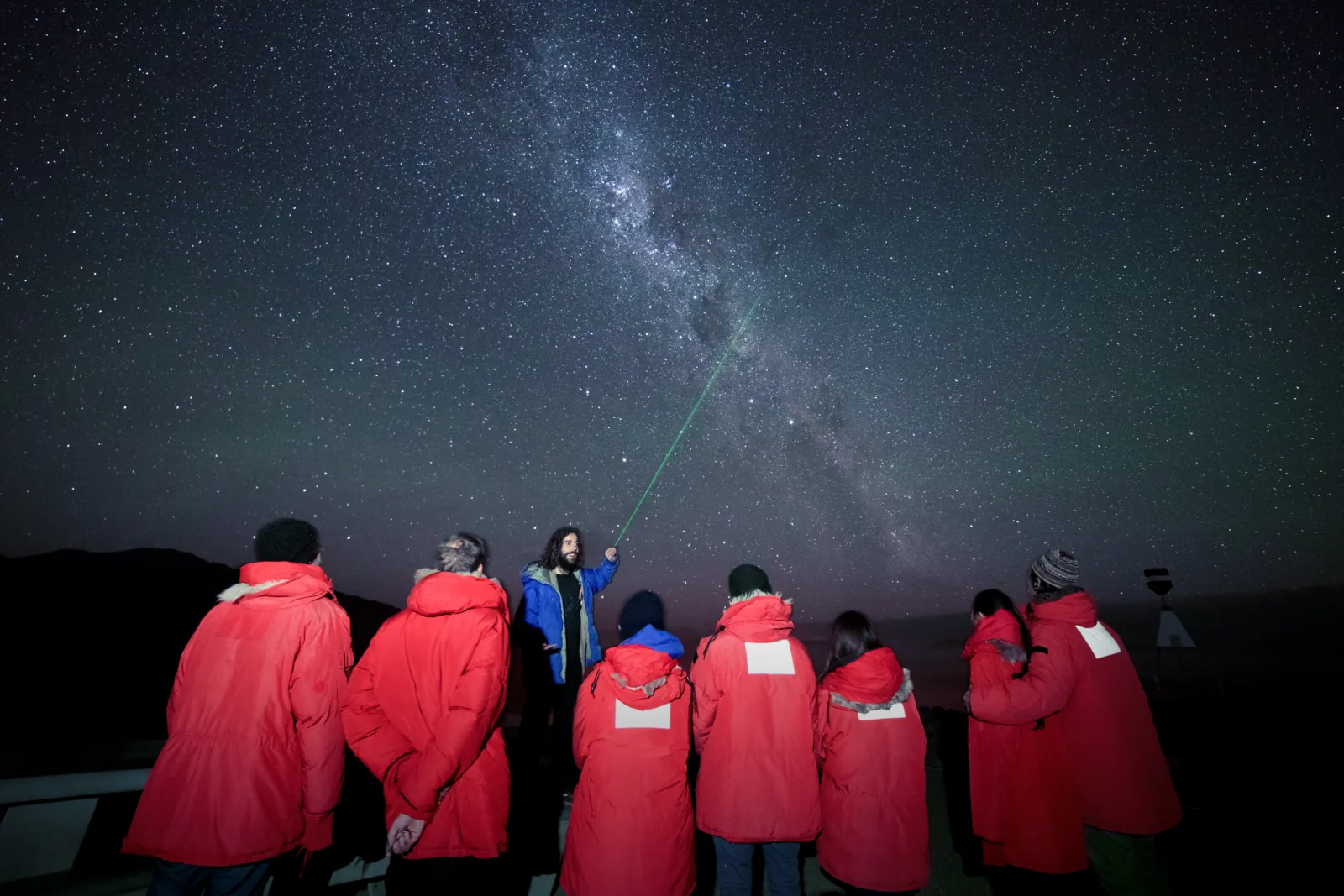
Stargazing at night on the observatory summit.
- 4.6 / 5 345+ Reviews
- 1 hour 45 minutes Duration
- 1,029 m Summit Altitude
- 10+ Minimum Age
- Free Cancellation
Book Your Experience
Check Availability & Prices
Select your preferred date and time. Instant confirmation — free cancellation up to 24 hours before departure.
The Experience
What the Summit Experience Includes
Dark Sky Project's night tour at the University of Canterbury observatory above Lake Tekapo.
Highlights
- The only tour that takes you to the summit of Mount John, beside a working university observatory
- Stargazing from 1,029 metres above sea level, above the lake and the village lights
- Telescopes from 9¼ to 16 inches, including one inside an observatory dome
- A naked-eye laser tour of the southern sky before you move to the eyepieces
- An extreme cold weather jacket to wear for the whole tour
- Return bus between the Dark Sky Project base and the summit, about 15 minutes each way
What's Included
- Guided mountaintop stargazing experience, 1 hour 45 minutes round trip
- Access to the Mount John Observatory summit (1,029 m)
- Expert astronomy guide and storytelling
- Use of telescopes, including one in an observatory dome
- Return bus between the Dark Sky Project base and the summit
- Extreme cold weather jacket
Can't Make These Dates?
Browse More Available Options
Find a tour that fits your schedule — all with instant confirmation and free cancellation.
How the Mount John Tour Works
From the lakefront check-in to the summit telescopes and back, in about 1 hour 45 minutes.
Check In at the Base
Arrive at Dark Sky Project, 1 Motuariki Lane on the Tekapo lakefront, at least 20 minutes early. Start times follow sunset, so they shift through the year.
Bus to the Summit
The tour bus takes about 15 minutes to climb Mount John. The public road shuts at 4 pm, so the bus is the only way onto the summit after dark.
Naked-Eye Sky Tour
Wearing the cold-weather jacket provided, you follow the guide's laser around the southern constellations after a short walk up a 100 m gravel incline.
Telescopes and Dome
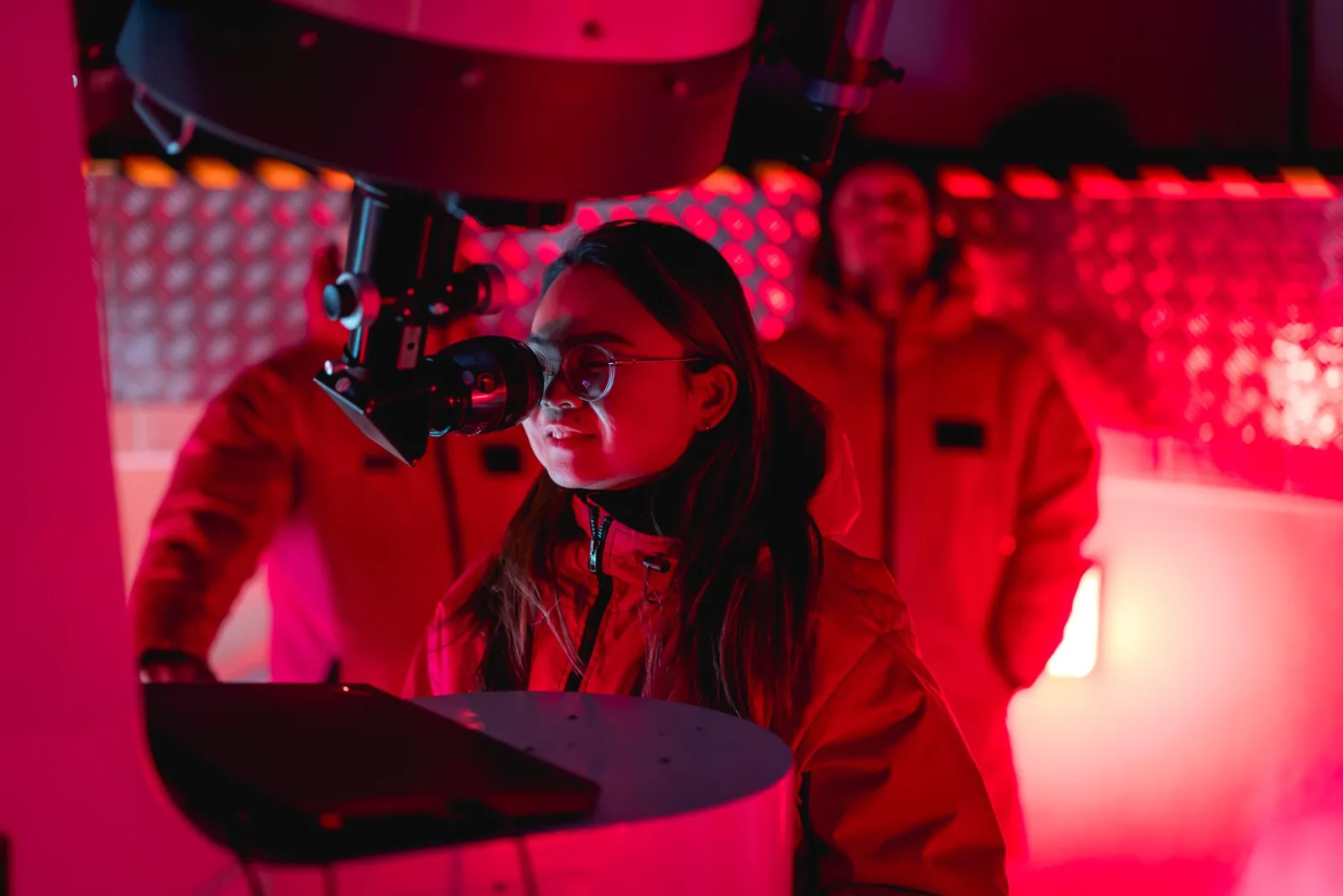
Move between telescopes from 9¼ to 16 inches, including one inside an observatory dome, for star clusters, nebulae and galaxies. Flash photography is not allowed.
Photo Gallery
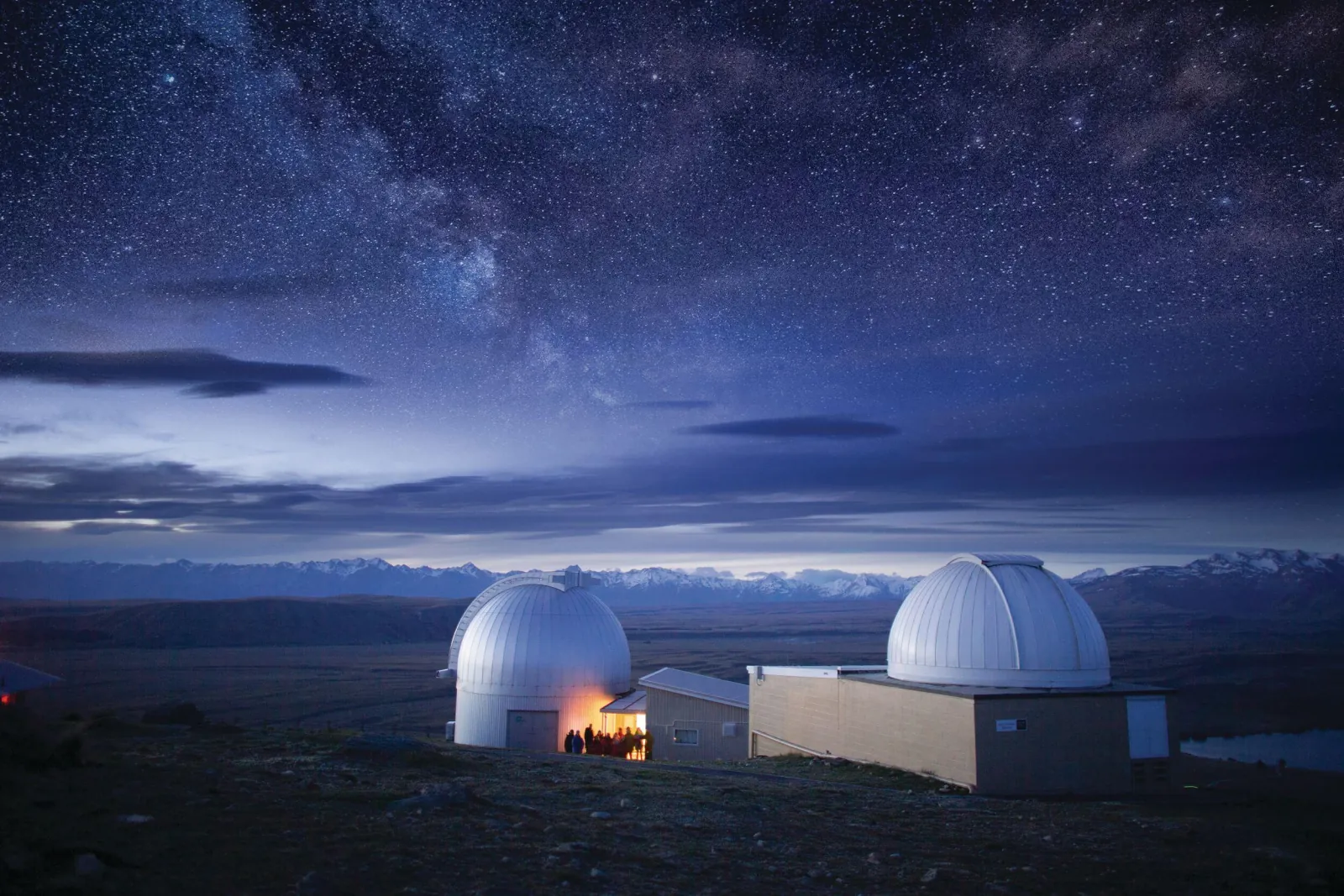
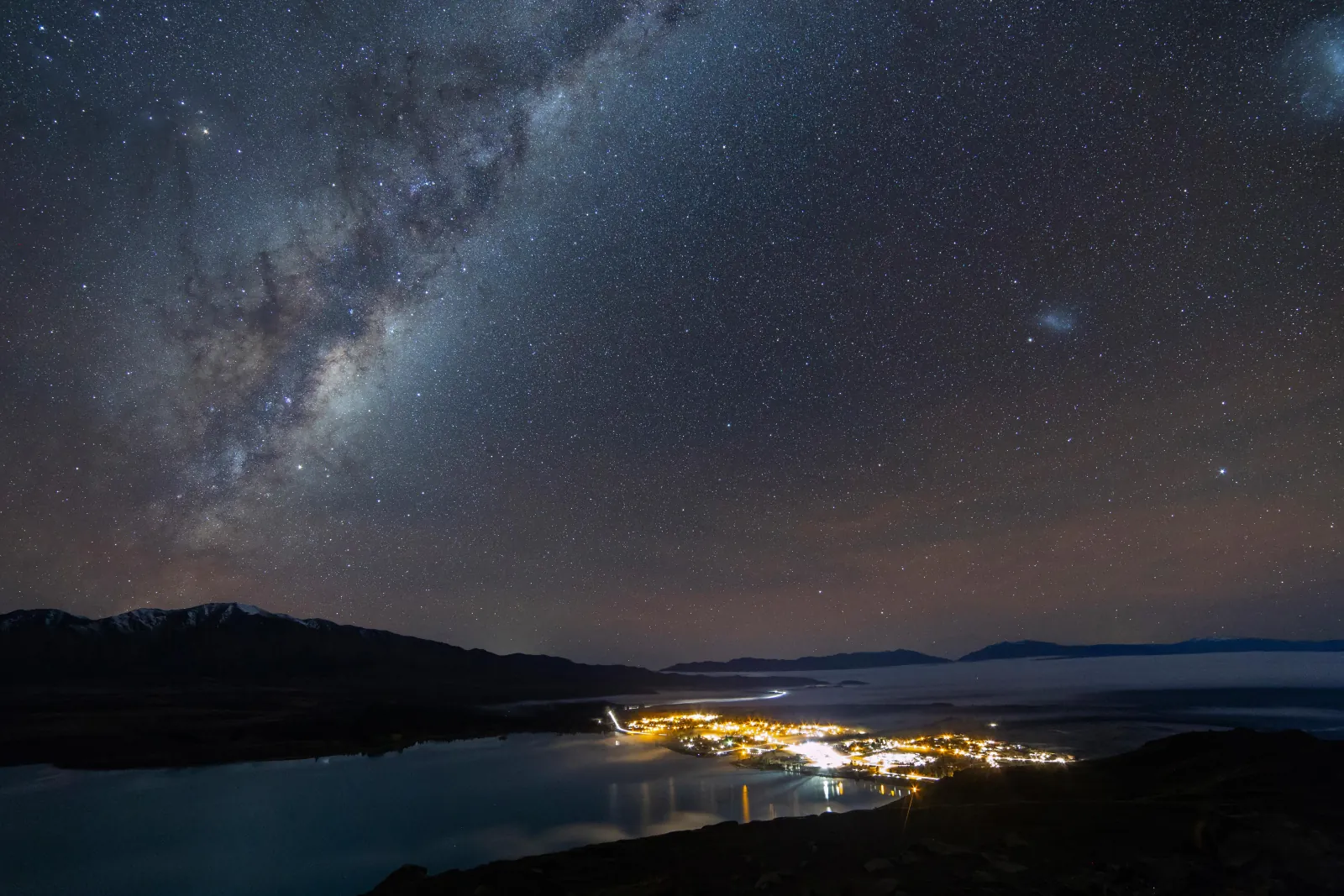
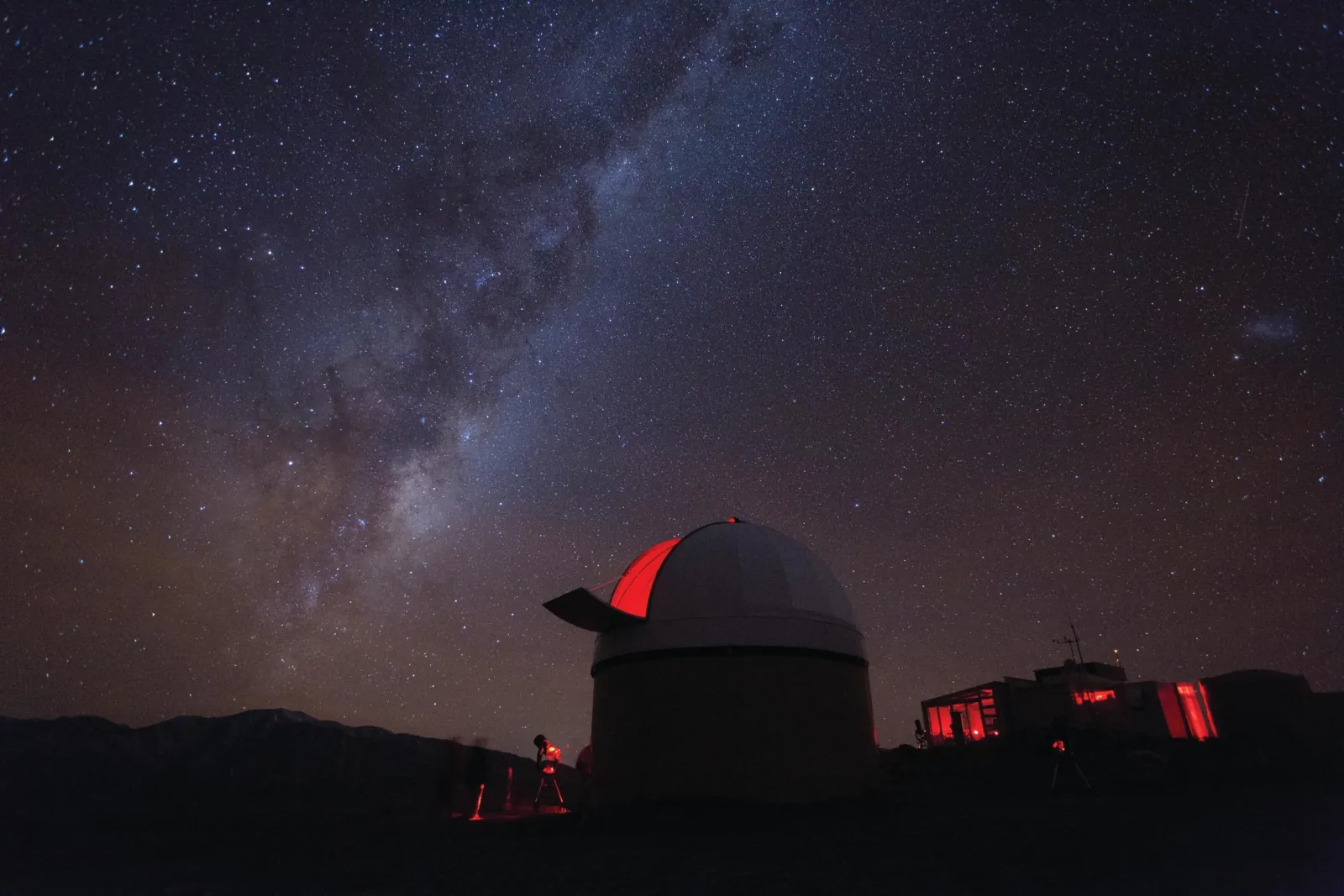
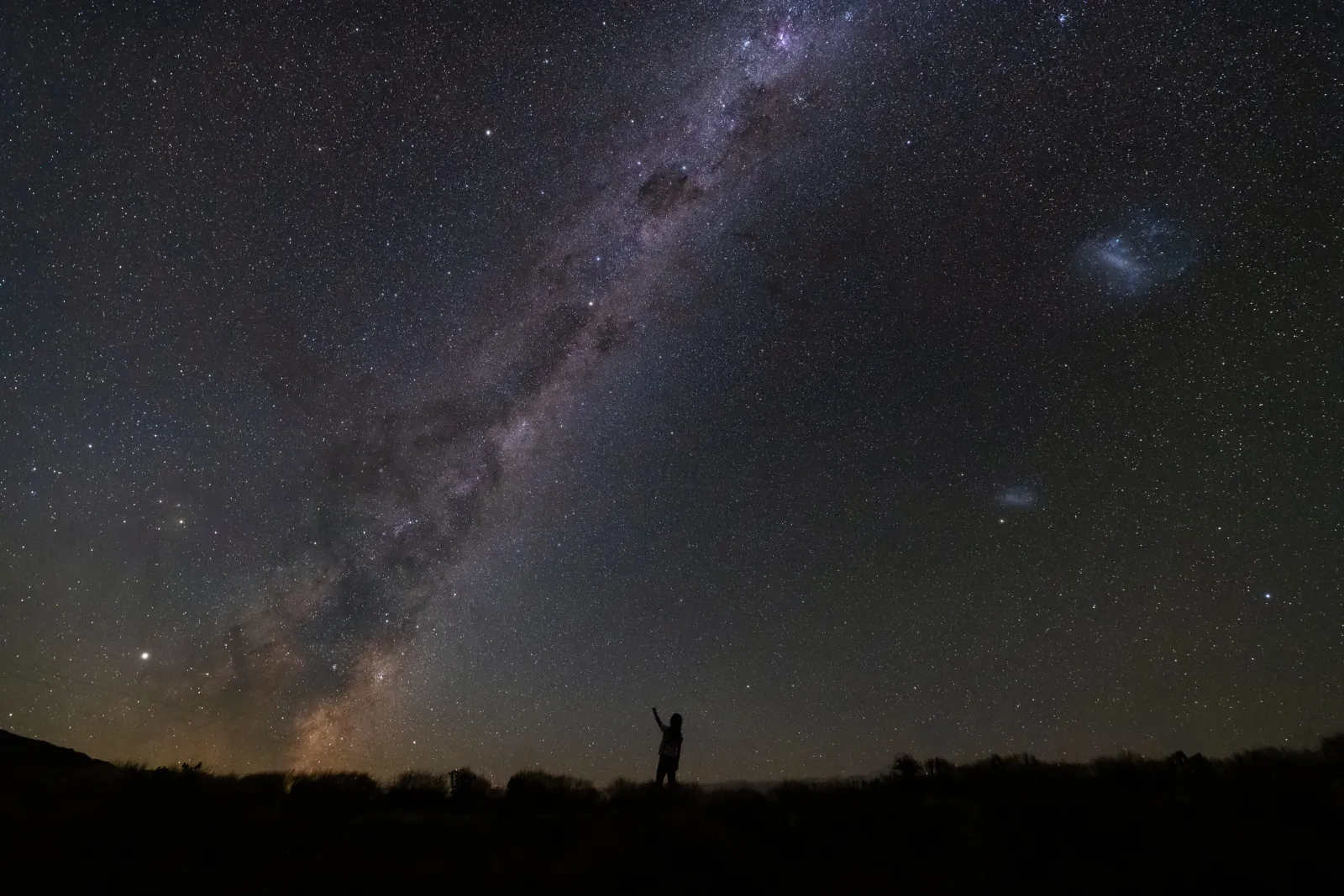
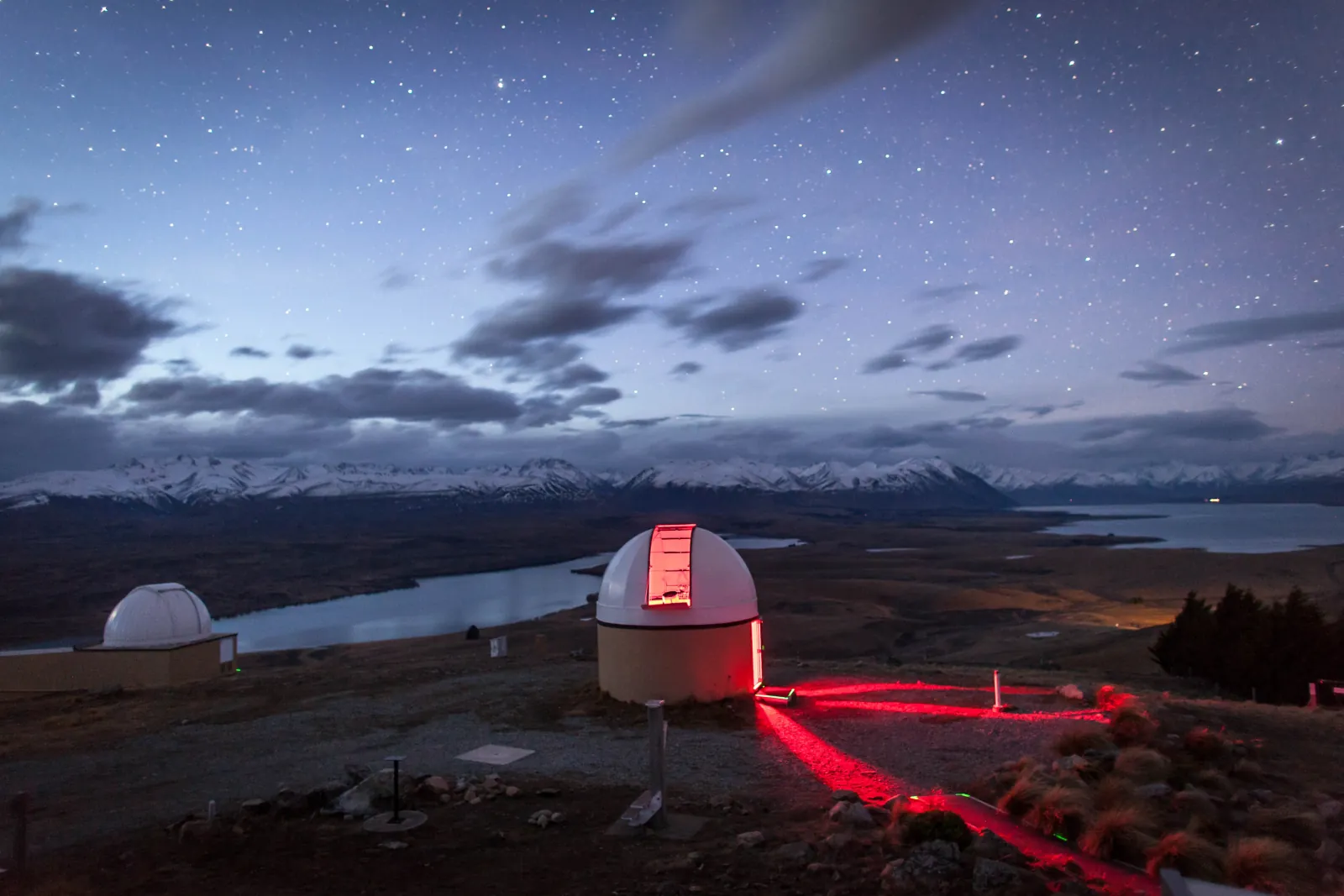
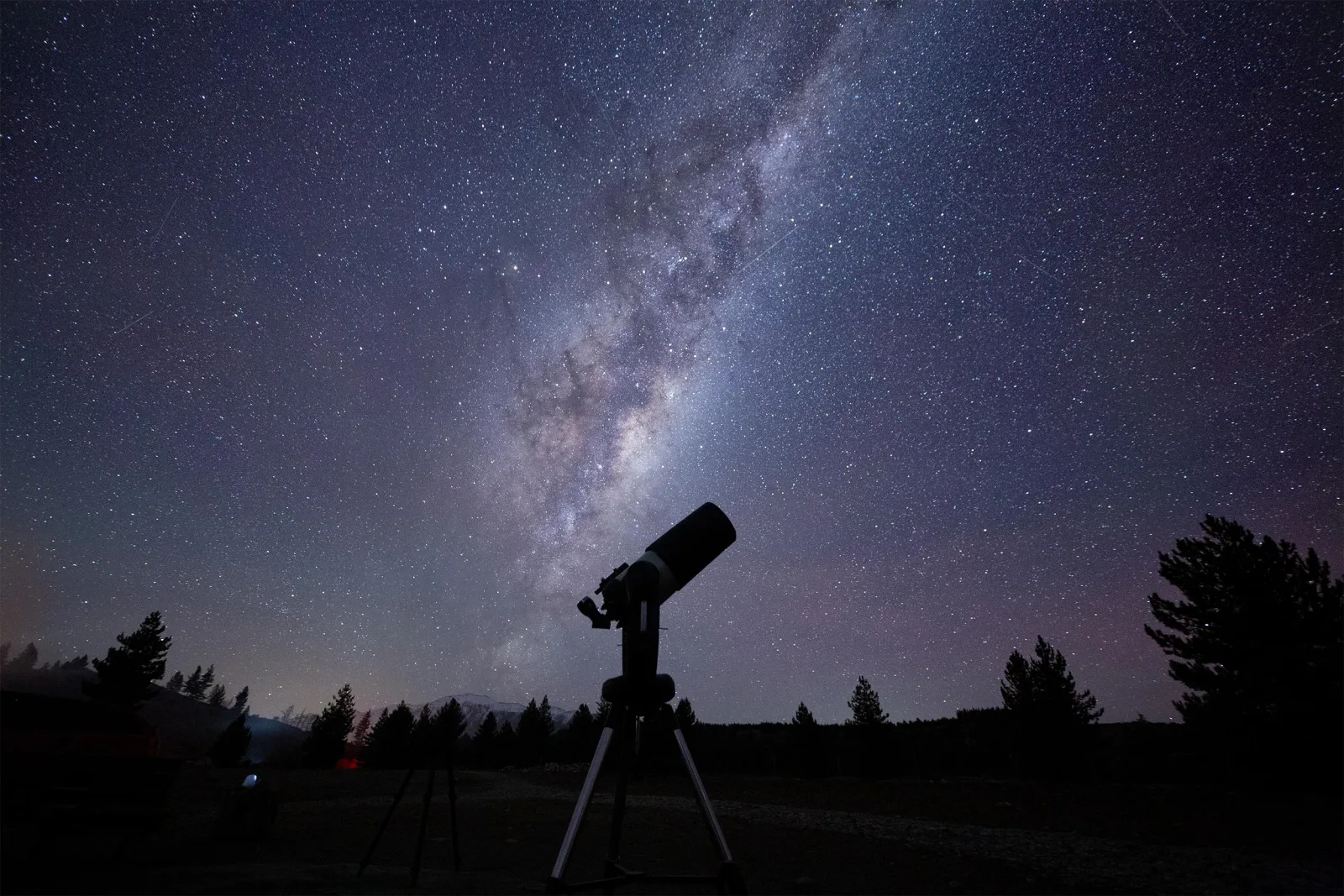
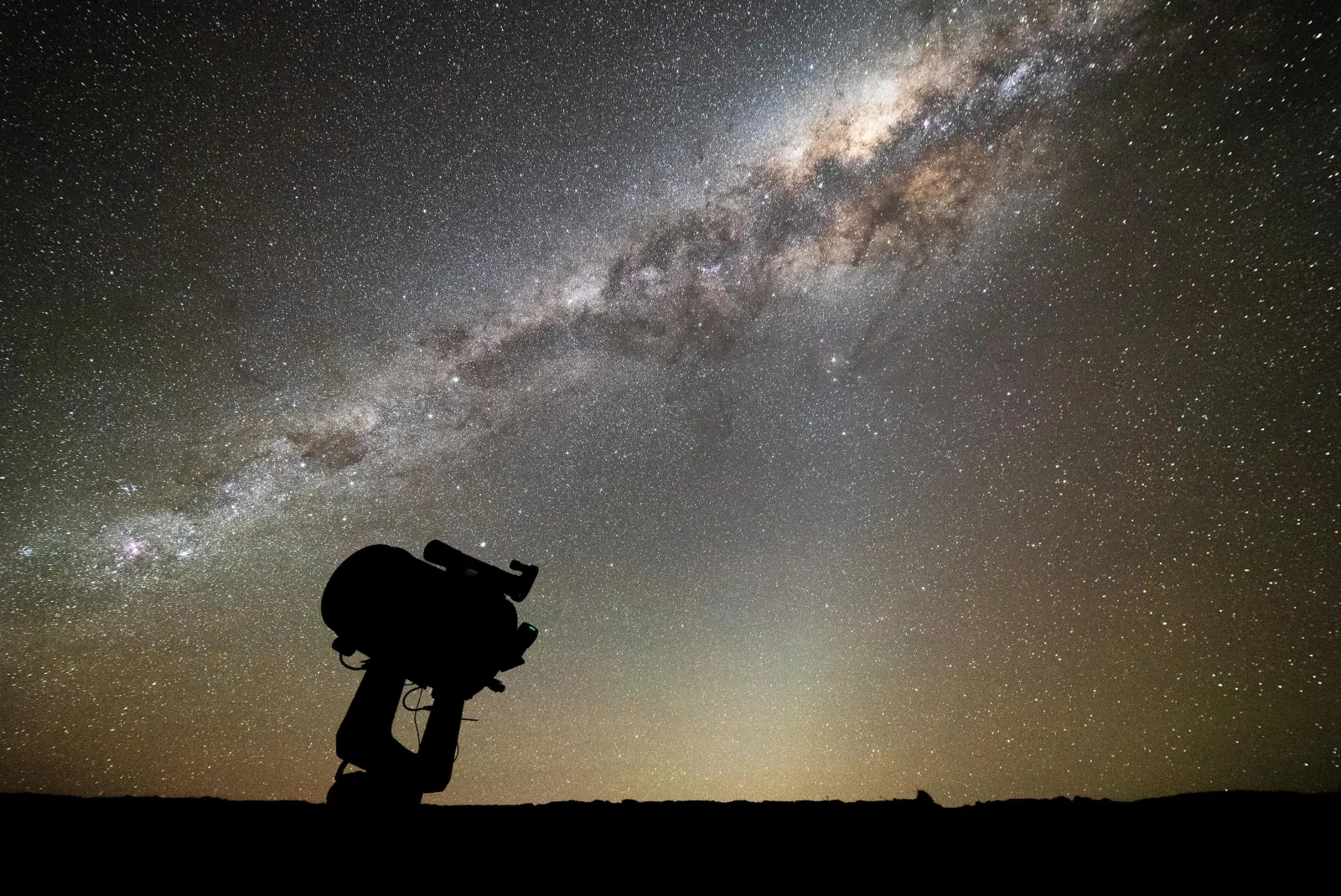
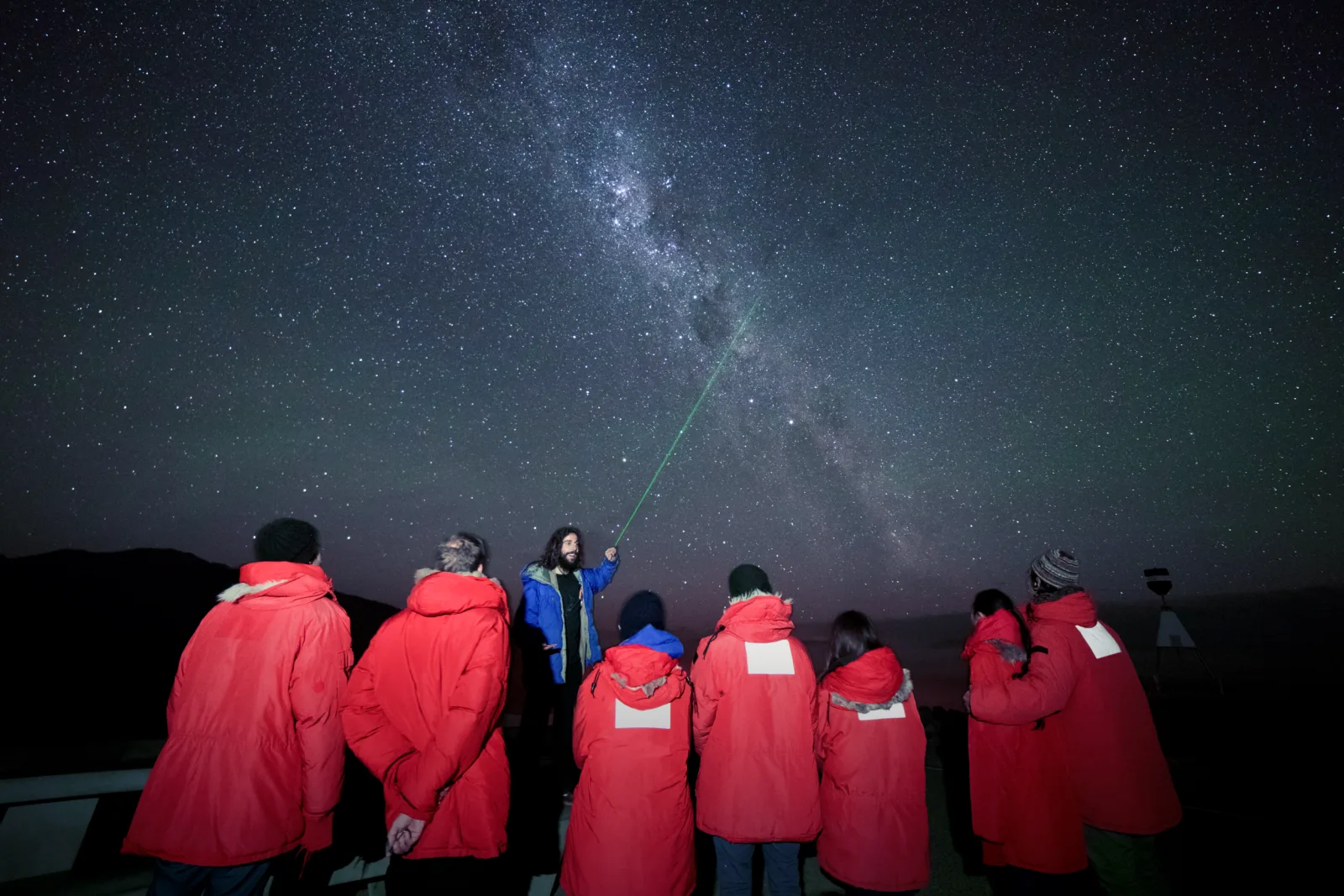
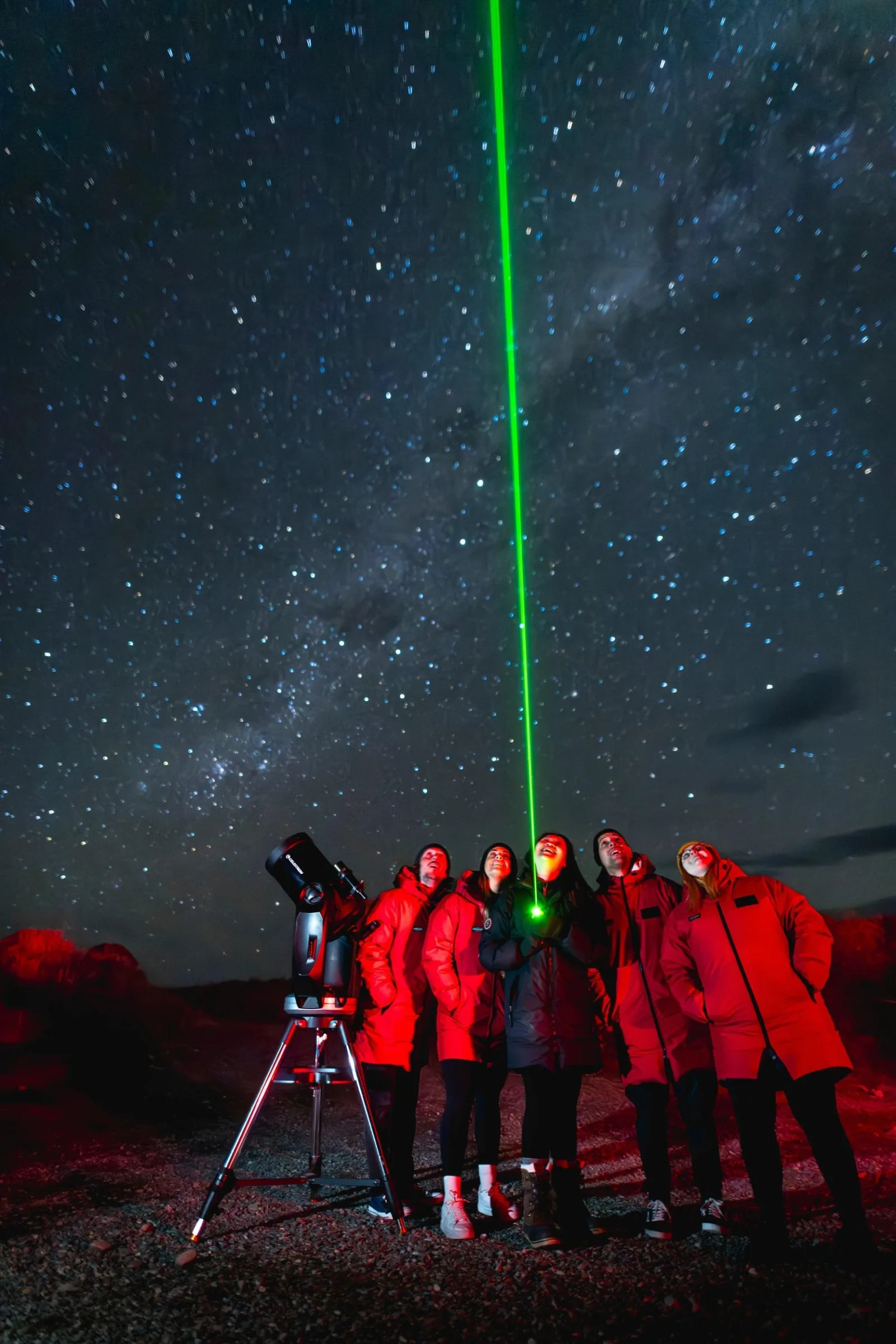
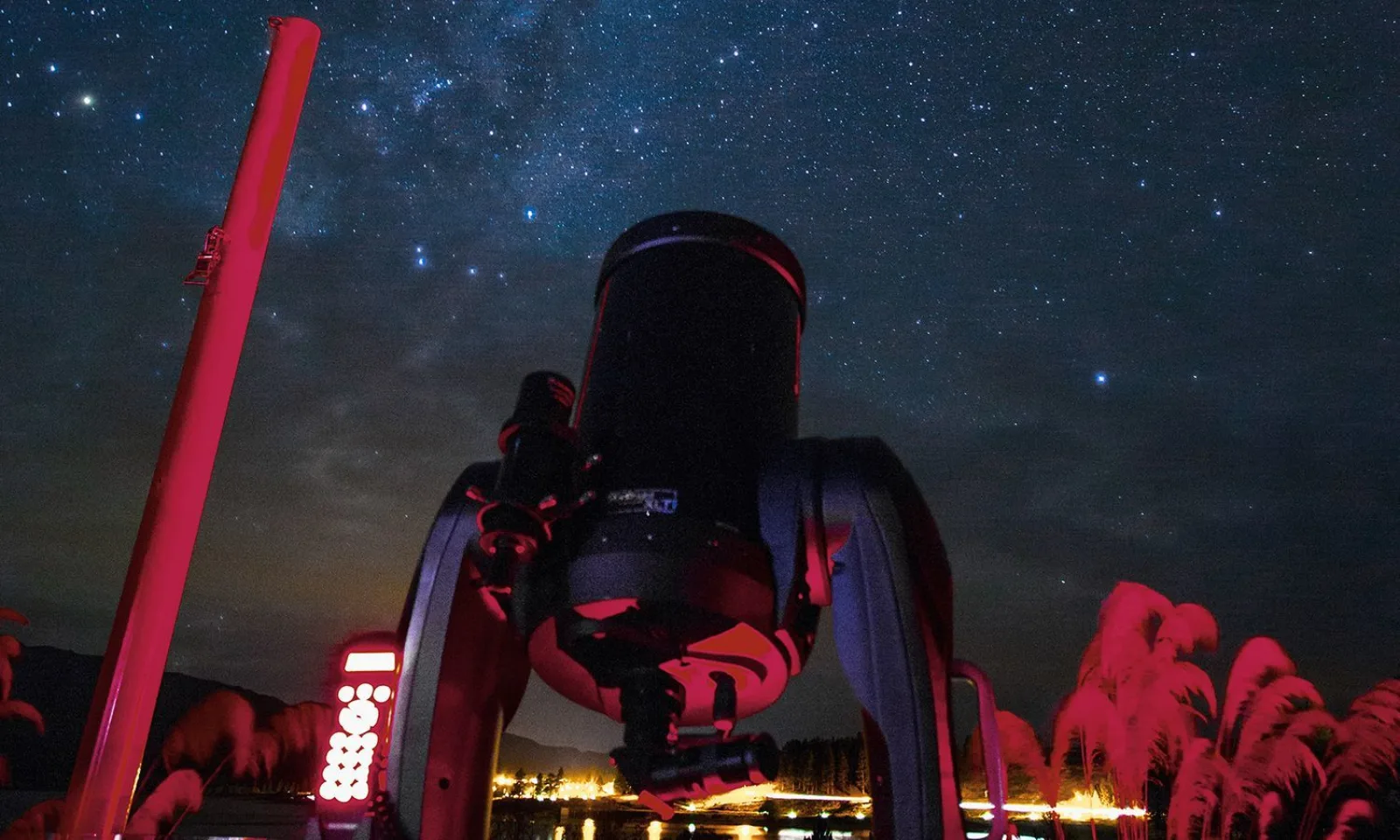
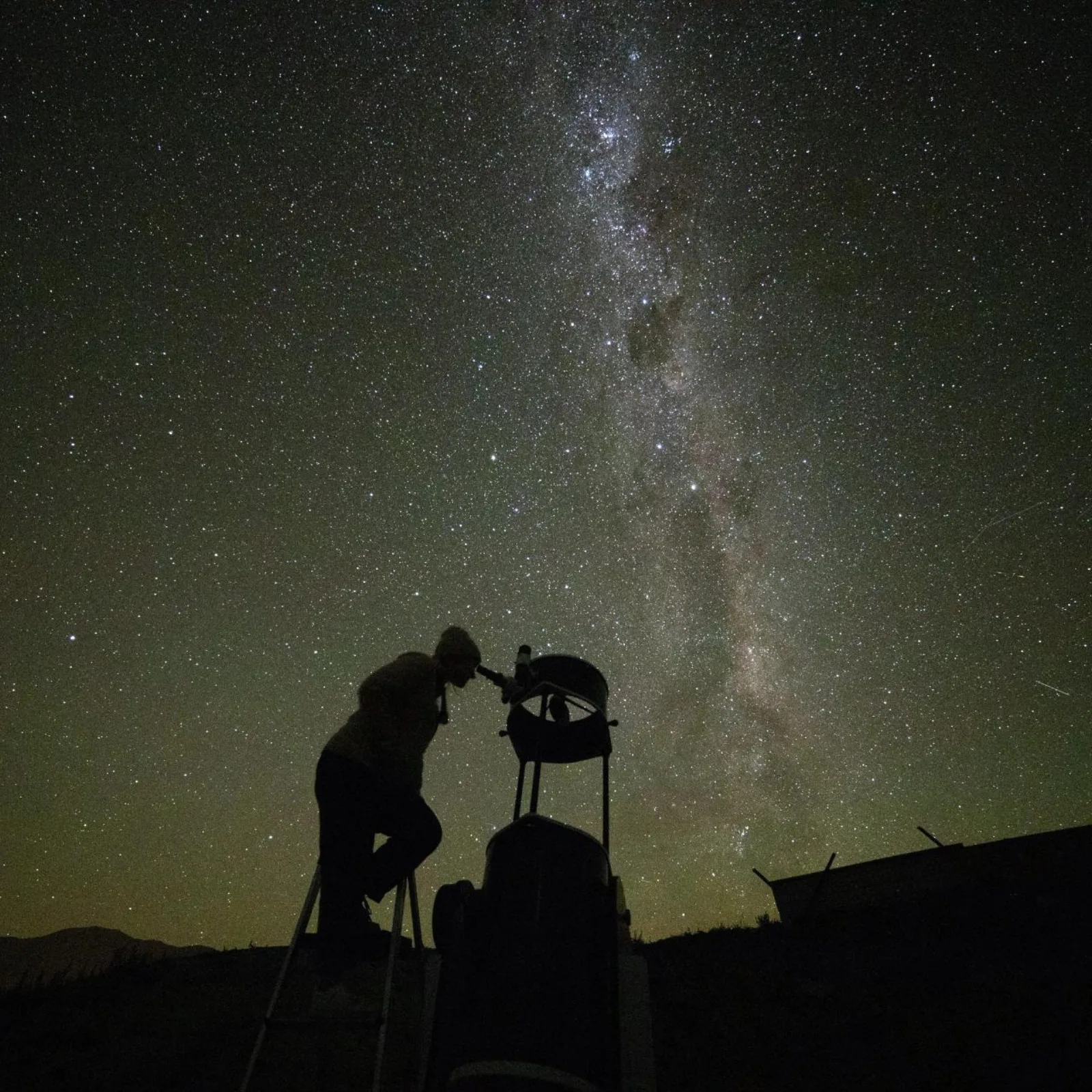
Mount John Summit at Night
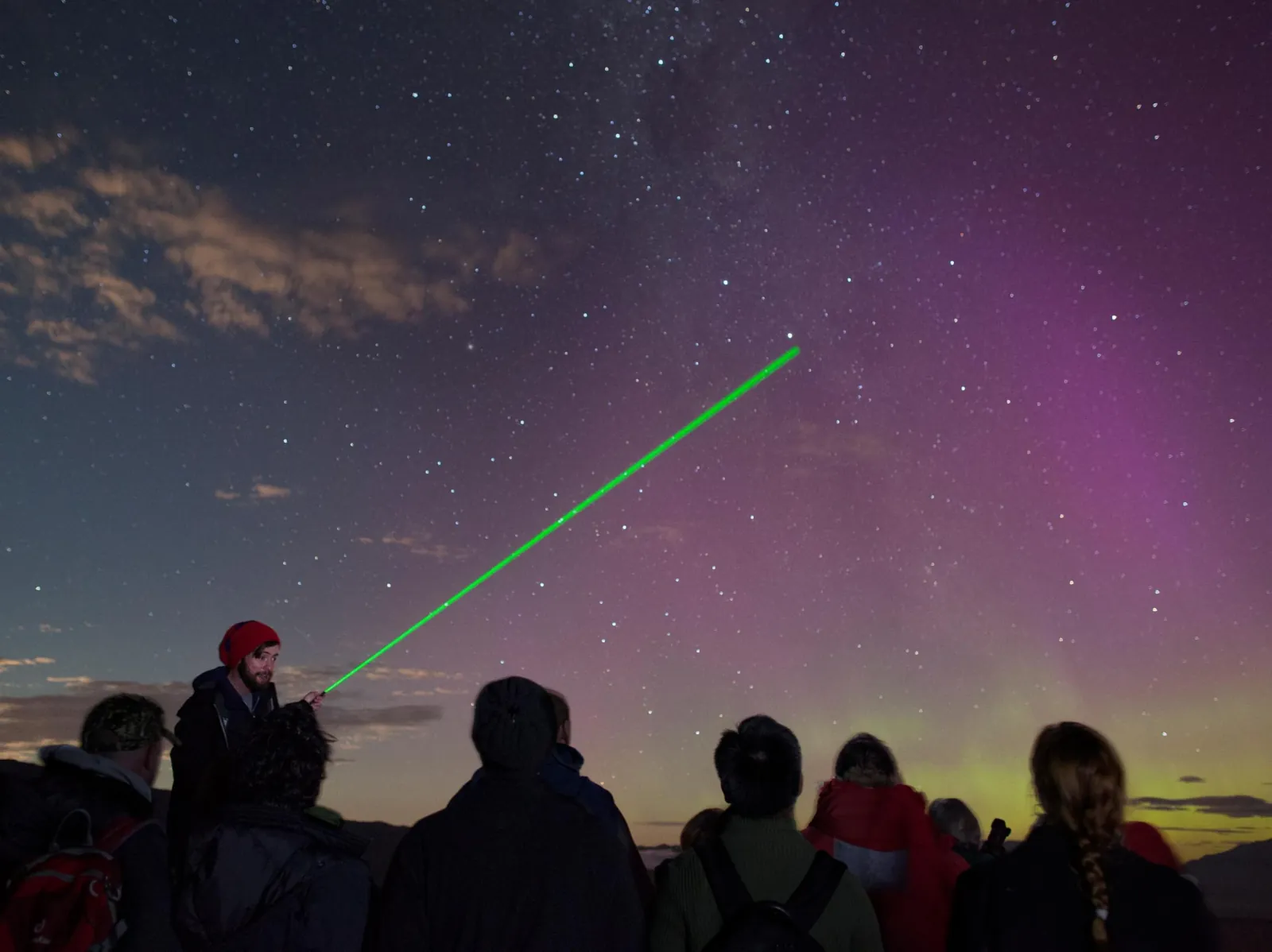
Domes, telescopes and the Dark Sky Reserve sky above Lake Tekapo.
Mount John Summit vs Cowan's Crater vs Chameleon
The observatory summit tour next to the two main alternatives in Lake Tekapo.
| Feature | THE SUMMIT Mount John Summit Experience | Crater Experience at Cowan's | Chameleon Stargazing |
|---|---|---|---|
| Starting Price | From $125 per person | From $74 per person | From $74 per person |
| Where You Stargaze | Mount John Observatory summit, 1,029 m | Sheltered craters at Cowan's Private Observatory | Dark site beside the Tekapo River |
| Duration | 1 h 45 min incl. bus | 75 min | 90 min |
| Telescopes | 9¼–16 inch, incl. observatory dome | 9¼–14 inch + observatory dome | 9.25-inch + smart telescope |
| Minimum Age | 10 | 5 | 5 |
| Warmth | ✓ Cold-weather jacket included | ✗ Bring your own warm layers | Blankets, hot chocolate, fire bowl |
| Transport | ✓ Return bus from lakefront base | ✓ Return transport from base | ✗ Own way (4-min drive) or paid shuttle |
| If It's Cloudy | Indoor alternative, reschedule, voucher or refund | Indoor alternative, reschedule, voucher or refund | Full refund if cancelled for weather |
| Check Availability | See Crater Experience | See Chameleon |
Compare Tours
Lake Tekapo Stargazing Tours Compared
Six ways to see the Tekapo sky — from a $68 farm tour to the Mount John summit.
 GUEST FAVOURITE
Lake Tekapo: Stargazing Experience
 MOST REVIEWED
Lake Tekapo: Alpine Stargazing Experience with a Guide
 SUMMIT OBSERVATORY
Lake Tekapo: Mount John Summit Stargazing Experience
 FAMILY FRIENDLY
Lake Tekapo: Crater Stargazing at Cowan's Observatory
 HOT POOLS
Lake Tekapo: 90-minute Hot Pools & Stargazing Experience
 2-HOUR PREMIUM
Lake Tekapo: Ultimate Stargazing Experience
Mount John Guide
Is the Mount John Observatory Tour Worth It?
What you see, what it costs, how cold it gets, and when another Tekapo tour suits you better.
Mount John Observatory is the research station on the hill above Lake Tekapo, and at night the only way onto its summit is the Mount John Summit Experience run by Dark Sky Project, from $125 per person. It is the best choice in Tekapo if you want the setting as much as the stars: working observatory domes, a 1,029 m summit and the lake below you in the dark. If you are travelling with children under 10, want a warmer and cheaper night, or care most about a photo of yourself under the Milky Way, one of the village-edge tours below will suit you better.
By day the summit is a different place: you can drive or walk up for one of the widest views in the Mackenzie Basin and a coffee at the Astro Café, with no tour needed. What you cannot do is wander into the observatory buildings, or drive up after dark. This page covers both visits.
Mount John Observatory at a glance
| Where | Ōtehīwai Mount John, beside Lake Tekapo/Takapō |
| Summit height | 1,029 m |
| Observatory run by | University of Canterbury |
| Visit in the daytime? | Yes: the summit, viewpoint and Astro Café, while the road is open |
| Drive up at night on your own? | No: night visits are by tour only |
| Night tour | Dark Sky Project’s Summit Experience |
| Night tour length | About 1 hour 45 minutes, including the bus |
| Minimum age at night | 10 |
| Telescopes | 9¼ to 16 inches, one inside a dome |
| Research telescopes open to visitors? | No |
| Daytime road fee | NZ$14 per vehicle |
| Drive from Tekapo village | About 15 minutes |
| Walk | Ōtehīwai Mount John Summit Circuit, 8.9 km return to Tekapo |
| Best for | Telescope views, astronomy fans, the summit panorama and astrophotography |
The road fee and opening hours can change, so check shortly before you go. Dark Sky Project lists the access road as open 9 am to 4 pm every day, weather permitting.
What the tour is
Ōtehīwai Mt John Observatory opened in 1965 and is the University of Canterbury’s main astronomy field station, with four research telescopes on the summit. The largest, the 1.8 m MOA telescope, is the biggest telescope in New Zealand. Research there covers stars, exoplanets, comets, near-Earth objects and the atmosphere, and the site also has a weather station and sky-monitoring equipment. You do not look through the research instruments. Dark Sky Project, which has run guided summit tours since 2004, sets up its own telescopes beside them, from 9¼ inches up to a 16-inch inside an observatory dome.
The tour lasts about 1 hour 45 minutes from the lakefront base at 1 Motuariki Lane, including a bus ride of about 15 minutes each way. On top, the guide starts with a naked-eye tour of the sky using a laser pointer, then you move between the telescopes. An extreme-cold-weather jacket is included and you wear it for the whole visit. Tours run seven nights a week and start times follow sunset, so check the time on your booking. Full darkness comes around 7 pm in June and not until after 11 pm in December and January.
Our full breakdown of the Summit Experience lists everything included and what to bring.
What happens on the Summit Experience
- Check in at the base. Arrive at 1 Motuariki Lane about 20 minutes before departure. Dark Sky Project’s terms treat guests who have not checked in shortly before the bus leaves as no-shows, so don’t cut it fine. The tour starts in the village, not on Mount John.
- Ride to the summit. The bus takes about 15 minutes, which also means nobody drives a dark mountain road afterwards.
- Learn the sky by eye. The guide orients you with a low-impact laser: the Southern Cross, Alpha and Beta Centauri, the Magellanic Clouds, bright planets, star clusters, sections of the Milky Way and the season’s constellations. For many Northern Hemisphere visitors this part is a revelation, because familiar constellations are missing, upside down or in the wrong place.
- Look through the telescopes. Depending on what is up, that can mean the Moon’s craters, Jupiter and its moons, Saturn, double stars, open and globular clusters, nebulae and galaxies. You won’t see all of them on one night; like wildlife watching, it depends on what the sky offers that night.
Allow about 2¼ hours door to door, once you add the early check-in.
Can you go up Mount John at night?
Not on your own. The Mount John access road is open from 9 am to 4 pm, with a NZ$14 toll for each car, so you can drive up in the daytime for the view but the road is closed well before dark. After dark the tour bus is the only way to the summit, and of the tours on this site it is the only one that stargazes from Mount John itself. Tekapo Springs sits at the foot of the hill, and the other operators use sites around the village.
The controlled access is not only a commercial arrangement. Mount John is a working research site, and keeping headlights, phone screens and other light off the summit protects both the science and the dark sky.
Visiting Mount John in the daytime
You can visit the summit independently while the road is open, by car or on foot, with no booking. Treat a daytime visit as a viewpoint, a walk and a café, with a look at a working observatory from the outside: the University of Canterbury describes the research facility itself as not normally open to the public.
Daytime opening hours
Dark Sky Project lists the Mount John access road as open 9 am to 4 pm, Monday to Sunday. For the Astro Café, its own pages give two different sets of hours, 9 am to 4 pm on the café page and 10 am to 3 pm on its contact page, and both the road and the café can close in bad weather. On days when the café cannot open, the Dark Sky Diner at the lakefront base opens from 9 am instead. Check on the day, and don’t build a tight itinerary around the café.
Go up earlier than 3:45 pm. That leaves time to enjoy the views, walk some or all of the summit loop, stop at the café, take photos, allow for a queue at the road gate and come down before the road closes.
How to drive to Mount John
From the village the drive takes about 15 minutes. The access road leaves Godley Peaks Road, off State Highway 8, and the last stretch is the private Mount John Observatory access road up to the summit. It is sealed but steep, with tight bends. The NZ$14 road-user fee is paid at the gate by EFTPOS or credit card and goes towards maintaining the private road.
For a normal car in good conditions it is not a difficult road, far easier than some New Zealand mountain roads, but take the bends slowly and expect the weather to change quickly. In winter, frost, snow or ice can close it.
Can you walk to Mount John Observatory?
Yes, and with time and settled weather walking is the better daytime outing. The Ōtehīwai Mount John Summit Circuit is 8.9 km return to Tekapo, and Dark Sky Project recommends sturdy footwear and a reasonable level of fitness. A popular route starts near Tekapo Springs and climbs through woodland before coming out onto open tussock; the lake appears through the trees first, then the whole basin opens up as you near the summit.
Drive if you are short of time, the weather is marginal, you have small children, mobility is a concern or Mount John is one stop on a packed road trip. Walk if you have several hours, the weather is settled, you enjoy easy-to-moderate hiking, you want more viewpoints and you don’t mind a climb. If you have a full day in Tekapo, we would walk up Mount John in daylight and take a separate stargazing tour after dark: they feel like two completely different outings.
What is the Astro Café?
A small glass-walled café on the summit beside the observatory. It is not a destination for elaborate dining; the appeal is the view. Coffee, cakes, sandwiches and light meals come with big windows over the Mackenzie Basin, and Dark Sky Project suggests a 30 to 45-minute walk around the summit to go with it. On a clear day you look over Lake Tekapo, Lake Alexandrina, the basin and the Southern Alps, and in the clearest conditions towards Aoraki/Mount Cook. If you are driving between Christchurch and Mount Cook, it is one of the few coffee stops where you will spend longer looking out of the window than at your food.
What you see from the summit
The summit sits inside the Aoraki Mackenzie International Dark Sky Reserve, designated in 2012 by the International Dark-Sky Association and covering 4,367 km² of the Mackenzie Basin and Aoraki/Mt Cook National Park. Lighting controls here go back to 1981, so the village below throws very little glow into the sky. The summit’s wide horizons, the same ones that make the daytime view, give an unusually open view of the southern sky at night.
On any clear night of the year you can find the Southern Cross and the Large and Small Magellanic Clouds, which never set from this latitude. The bright core of the Milky Way is up from roughly February to October and is at its best in June and July. Through the telescopes the guides pick star clusters, nebulae and galaxies depending on the season and the moon. A full moon washes out a lot of the fainter starlight, so a night near new moon gives you the darkest sky.
The Milky Way
On a clear, moonless night the Milky Way is spectacular from the summit. The bright galactic centre is seasonal: the most dramatic views come in the longer nights from autumn through winter into early spring. Summer skies are just as dark, but a different, fainter part of the Milky Way fills the evening sky.
The Southern Cross
The Southern Cross is a classic first sight for overseas visitors, and from Tekapo’s latitude it is up all year. Your guide can show you how New Zealanders use it and its two Pointer stars to find south.
The Magellanic Clouds
The Large and Small Magellanic Clouds are satellite galaxies of the Milky Way and one of the great advantages of southern stargazing. To the naked eye they are hazy patches, not spiral showpieces, but knowing you are looking at whole galaxies outside our own changes how they look.
Planets
Depending on the year and the season you might see Jupiter, Saturn, Mars or Venus. Planets are where a telescope makes the biggest difference, and Saturn’s rings and Jupiter’s moons are often what first-time telescope users remember most.
Can you see the Aurora Australis from Mount John?
Possibly, but don’t book a Mount John tour expecting one. An aurora depends on solar activity, geomagnetic conditions, cloud, moonlight and timing. There may be nights when one appears during your visit and there will be many more when it doesn’t. Dark Sky Project itself warns that both the Milky Way and the Southern Lights depend on conditions. A tour can reliably give you astronomy; it cannot reliably give you an aurora.
Can tourists use the research telescopes?
No, and this is the expectation to get right before you book. The research telescopes are not opened for tourists; you use the telescopes Dark Sky Project sets up for the tour. The 1.8 m MOA telescope is an imaging instrument, and Dark Sky Project notes that even researchers do not put an eye to it: its observations are recorded and examined electronically. The special part is stargazing inside a working observatory, not operating its instruments.
How much does the Mount John tour cost?
On GetYourGuide the Summit Experience starts from $125 per person. Prices vary by date and season, and Dark Sky Project’s own published rates change by period, so check the live price for your date in the booking calendar before you decide. Our Tekapo stargazing prices page compares every tour.
Altitude, wind and cold
This is the part to plan for. At 1,029 m the summit is exposed, and Mount John holds the New Zealand record gust of 250 km/h, measured in April 1970. Spring, from September to November, is the windiest season in the area. Down at the lake, the average July overnight low is −2.8 °C and even January nights average 8.5 °C, and the summit is higher and more exposed than the village.
The jacket helps a great deal, but bring a hat, gloves and closed shoes with grip. There is a 100 m gravel incline and a few steps to climb in the dark, which is why the tour is not wheelchair accessible and is not suited to people with limited mobility. The minimum age is 10, with one adult needed for every two children.
What to wear for Mount John stargazing
More than you think. Even if the village felt mild at 4 pm, standing still on an exposed summit at night feels far colder. Dark Sky Project recommends warm clothing in every season and lends Extreme Cold Weather jackets to Summit guests. Under the jacket, wear long trousers, warm socks, closed shoes or boots, a thermal base layer on colder nights, a fleece or jumper, a windproof layer, a beanie and gloves.
Summer visitors especially: a New Zealand summer is not a tropical one. Once the sun drops behind the mountains and you stop moving, the temperature falls fast.
Accessibility
The Summit Experience is not fully accessible: guests climb about 100 m of gravel incline and a few steps in the dark, and it is not wheelchair accessible. The Crater Experience may suit travellers with mobility concerns better, but discuss your needs with the operator before booking.
Can children visit Mount John Observatory?
At night the minimum age is 10. In the daytime the summit is fine for families: with younger children you can drive up, visit the café, enjoy the views, do a shorter walk and choose a more child-friendly astronomy tour in the evening. Our stargazing with kids guide lists the options by age.
Photography on the Mount John tour
Photography is allowed, without flash or bright lights. The operator’s terms ban white lights and lit screens because they ruin everyone’s night vision and add light pollution. Before the tour, turn your screen brightness down and switch off the flash, automatic brightness, torch shortcuts and bright smartwatch faces; a glowing watch is surprisingly distracting when 20 people are trying to keep their night vision.
Is Mount John good for astrophotography?
Yes. Very dark skies, little surrounding light, observatory domes, mountain silhouettes and the Milky Way make it one of New Zealand’s most recognisable astrophotography settings. But a stargazing tour is not a private photography workshop: you move with a group and around the telescopes. If serious Milky Way photography is your main aim, check the rules on tripods, long exposures, where cameras can stand, red lights and how much time you will have to shoot.
If it is cloudy
Dark Sky Project cannot promise a clear sky. When cloud, wind or bad conditions stop the summit tour, you are offered an indoor Alternative Weather Experience with astronomy storytelling and space-science visuals, or a reschedule, a three-year gift voucher or a full refund. Booked through GetYourGuide, you can also cancel free up to 24 hours before. Our page on Tekapo stargazing in cloudy weather compares every operator’s policy.
This is why two or three nights in Tekapo are far better than arriving at 5 pm, booking one tour and leaving at 8 am. Flexibility is the biggest single thing you can do to improve your chances.
Is a little cloud a problem?
Not necessarily. There is a big difference between some moving cloud and a fully overcast sky, and a partly cloudy forecast can still give excellent viewing windows. Mountain weather changes quickly, so a cloud icon three days out is no reason to panic. In the last 12 to 24 hours, watch the cloud cover, high cloud, wind, rain and where the Moon will be. The operator makes the final call.
Is Mount John good during a full moon?
Yes, but it is a different night. A bright moon washes out faint stars and lowers the Milky Way’s contrast, while the Moon itself becomes a superb telescope target, with mountain ranges, craters and long shadows along the terminator. Choose a darker moon if your priority is Milky Way photography, faint stars, the Magellanic Clouds, faint deep-sky objects or the full dark-sky atmosphere. Don’t worry much about the moon if you mainly want the planets, the Moon, your first look through a telescope, learning the constellations or the experience of Mount John itself.
Best time to visit Mount John Observatory
Best daytime visit
A clear late morning or early afternoon gives you the best chance of the full mountain panorama and leaves time for the summit walk and the café. A blue-sky winter day with snow on the Southern Alps can be even more dramatic than summer.
Best night-time visit
There is no bad season for stargazing at Tekapo, but each suits different priorities. Autumn (March to May) balances dark evenings, lengthening nights, the Milky Way and manageable temperatures, and may be the best all-round choice. Winter (June to August) gives the longest darkness, the earliest tour times and crisp skies, at the cost of serious cold on the summit. In spring (September to November) the sky is still excellent while the nights shorten and the weather is changeable. Summer (December to February) is milder, though rarely warm on the summit at night, and suits road trips, but darkness comes very late, so the tour can start when you would normally be thinking about bed. Our best time for stargazing guide has the darkness times for every month.
Mount John during the day vs at night
| Daytime Mount John | Night-time Mount John |
|---|---|
| Turquoise Lake Tekapo views | Dark southern sky |
| Southern Alps panorama | Milky Way |
| Astro Café | Telescope viewing |
| Drive yourself | Tour bus |
| Summit walks | Astronomy guide |
| Road fee only | Paid tour |
| Landscape photography | Astrophotography |
| No tour needed | Tour needed |
If you have time, do both. Standing on the summit at noon and again under a dark sky feels like visiting two different places.
When to choose something else
Book the summit tour if you are 10 or older, you want the observatory setting, and you are happy to trade a warm seat for altitude and wind. It is the tour people mean when they talk about stargazing on Mount John.
Choose the Crater Experience at Cowan’s Observatory if you have children aged 5 to 9 or want to spend less. It is the same operator and weather policy, from $74 per person, 75 minutes long, and set in sheltered viewing craters about five minutes from the base. Its largest telescope is 14 inches against Mount John’s 16, which matters far less to a first-time telescope user than it sounds; the main reason to pay for the summit is the summit itself. We compare the two in detail in Mount John vs Cowan’s Observatory.
Choose Chameleon Stargazing if comfort and photos matter most. From $74 per person, it has seats, mattresses and blankets, hot chocolate by a fire bowl, and edited photos of your group under the stars included in the price. You get yourself to the site, which is a four-minute drive from the village. More options are in our Chameleon Stargazing guide.
Mount John Observatory vs free stargazing
You don’t need Mount John to see a spectacular sky at Tekapo: on a clear, dark night, walking away from the village lights shows you thousands of stars. What you pay for on the summit is a guide, the telescopes, transport, a controlled dark site, the observatory setting and someone to tell you what you are looking at. Free stargazing suits you if your budget is tight, you already know the night sky, you mainly want Milky Way photos or you are happy with binoculars and your own eyes. Mount John suits you if it is your first serious stargazing night, you want telescope views and an explanation, and astronomy itself interests you. Our complete Lake Tekapo stargazing guide covers where to go on your own.
Common Mount John Observatory mistakes
- Assuming you can drive up at night. Mount John is not a 24-hour lookout; night access is controlled.
- Expecting to use the research telescopes. They are working scientific instruments; the tour telescopes are separate.
- Wearing ordinary summer clothes. The village may feel mild. The summit after dark may not.
- Treating a cloudy long-range forecast as a cancellation. Mountain forecasts change; wait until close to the tour.
- Expecting the aurora. Possible, yes. Guaranteed, no.
- Booking only one night in Tekapo. If the stars are a main reason for your trip, this is the biggest planning mistake. Two or three nights give you room when cloud arrives.
- Turning up just before departure. The tour leaves from the Dark Sky Project base in town, not from Mount John. Check in early.
A Mount John day and night
With one full day and night in Tekapo, we would plan it like this:
- Late morning: walk or drive up Mount John.
- Around lunch: coffee or something light at the Astro Café.
- Early afternoon: walk the summit loop and take photos.
- Afternoon: back to the village, the lakefront and the Church of the Good Shepherd, then rest.
- Dinner: eat before the tour instead of squeezing a meal into a late night.
- Evening: check in at Dark Sky Project for the Summit Experience.
That way the night tour is not your only look at Mount John. In the dark you cannot see the landscape below you at all.
Is Mount John Observatory worth it?
For most adults visiting Tekapo for the sky, yes. The summit tour costs more than the village-edge tours, and part of what you pay for is the place: the domes, the altitude and a view no other tour here reaches after dark. You are not paying for darker stars, which Tekapo gives you for free; you are paying to stand on a working research summit while an expert unpacks the southern sky and shows you planets, clusters and galaxies through serious telescopes. If you would mostly be looking through a telescope and would rather be warm, the cheaper tours show you the same southern sky.
And go up in daylight as well: the summit that shows you galaxies at night gives you one of the finest panoramas in the Mackenzie Basin by day. When you are ready, check availability for your dates, ideally for your first night in Tekapo so you have spare nights if the weather closes in.
Guest Reviews
What Mount John Summit Guests Say
Ratings and review counts are the tour operators' live figures on GetYourGuide and may shift slightly day to day.
"A very well organised tour - the weather didn't play ball for the whole time but as a consequence Dark Sky project refunded half of the cost - commendable and unexpected - would highly recommend this operator."
"The coolest unique experience. Merlin our guide was so knowledgeable and made the tour brilliant, filled with fun facts, cool information and I especially loved the opportunity see the night sky in the telescopes. Thank you for one of the best night sky experiences we've ever had."
"It was a very nice time and the best memory of my life because I was able to go to NZ with my long-cherished wish. Also I went to Tekapo, which I wanted to go to, and I was lucky enough to see a lot of stars."

"Unfortunately, due to the weather, we weren’t able to stargaze from the observatory. However, the indoor tour that was recommended as an alternative was very interesting and enjoyable. I asked a lot of questions, but our guide answered every one of them patiently and thoroughly. I learned so much and gained a much deeper understanding of the night sky in the Southern Hemisphere. Even though we couldn’t see the stars from the observatory, we had a wonderful experience. Thank you so much!"

"Exceptionally well arranged tour, really great insights were provided by our guide. And mesmerizing dark sky!"
"We enjoyed the tour very much, it was educational. Daley our tour guide was funny and knowledgeable. He also took care of the group and made sure that all of us stayed with the group. Liked that he personalized the tour as he made an effort to find out where we came from and tried to relate to us. Assistant guides were friendly and keen to share their knowledge - Aki-san and Katsu-san. Special mention for the stunning views that they showed us through the telescopes. The staff at the visitor center was friendly and took particular care of us knowing that we are from a tropical country and are not used to the cold. Overall will recommend the tour. However, if you are hoping to see the southern lights, please choose a new moon night for even a slightest chance."
"Great Guides, clear explanation and above all an amazing view!"
Read all 345 verified reviews
See All ReviewsBook the Mount John Summit Experience
Book at least a day ahead and you keep free cancellation up to 24 hours before, which is useful when the forecast turns. Starting from $125 per person.
Check Availability & BookMount John Observatory Tour: Frequently Asked Questions
Prices, night access, cold, age limits and what happens when cloud comes in.
For most adults who came to Tekapo for the night sky, yes. The Summit Experience is the only tour on this site that stargazes from the 1,029 m summit, beside working observatory domes, with jackets and the return bus included. If you mainly want time at a telescope and would rather be warm and spend less, the village-edge tours show the same southern sky.
The Mount John Summit Experience is from $125 per person on GetYourGuide, with free cancellation up to 24 hours before. The price includes the return bus from the lakefront base, an extreme-cold-weather jacket, the guide and the telescopes. For every tour's price side by side, see our Tekapo stargazing prices page.
Only on a tour. The public access road is open from 9 am to 4 pm with a NZ$14 toll for each car, so you cannot drive up after dark. Dark Sky Project's tour bus takes about 15 minutes from the lakefront base at 1 Motuariki Lane, and it is the only way to be on the summit at night.
About 1 hour 45 minutes from the lakefront base and back, including a bus ride of around 15 minutes each way. Check in at least 20 minutes before departure. Start times follow sunset, so they range from early evening in winter to late at night in summer, when full darkness does not arrive until after 11 pm.
The guide starts with a naked-eye laser tour of the constellations, including the Southern Cross and the Magellanic Clouds, which are up every clear night of the year. Through telescopes from 9¼ to 16 inches, one inside an observatory dome, you see star clusters, nebulae and galaxies. The Milky Way core is best from about June to July.
Colder than the village, and often windy. Down at the lake the average July overnight low is −2.8 °C and even January nights average 8.5 °C, while the summit sits at 1,029 m and is exposed. An extreme-cold-weather jacket is included, but bring a hat, gloves and closed shoes with grip in every season.
Ten years, with one adult for every two children. For children aged 5 to 9, Dark Sky Project's Crater Experience at Cowan's Observatory accepts children from five, is shorter at 75 minutes and is sheltered from the wind. Our Tekapo stargazing with kids guide covers every family option.
Dark Sky Project cannot guarantee a clear sky. If cloud, wind or poor conditions stop the summit tour, you are offered an indoor Alternative Weather Experience with astronomy storytelling and space-science visuals, or a reschedule, a three-year gift voucher or a full refund. See Tekapo stargazing in cloudy weather.
No. On the summit you walk about 100 m up a gravel incline and climb a couple of steps in the dark, so the tour is not suited to wheelchair users or people with limited mobility. Dark Sky Project's Crater Experience at Cowan's Observatory is the easier alternative, as wheelchair users can follow the tour transport in their own vehicle.
You can use your own camera, but flash photography is not allowed at the summit. There is no photo package on this tour. If a picture of yourself under the stars matters to you, Chameleon Stargazing includes edited photos of your group in the price, from $74 per person.
Book Mount John if everyone is 10 or older and you want the summit, the domes and the altitude. Book the Crater Experience at Cowan's if you have younger children, want a shorter and cheaper night from $74 per person, or dislike wind and cold. Our Mount John vs Cowan's Observatory page compares them in full.
In the daytime you can drive the access road between 9 am and 4 pm for a NZ$14 toll for each car and enjoy the view over Lake Tekapo. There is no free way onto the summit at night: stargazing there is only possible on the Summit Experience, from $125 per person, which includes the return bus from the lakefront.
The summit is, in the daytime: you can drive or walk up while the access road is open (9 am to 4 pm) for the views and the Astro Café. The University of Canterbury research observatory itself is not open for casual visits, and at night the summit is reached only on Dark Sky Project's guided Summit Experience.
The drive from the village takes about 15 minutes, via Godley Peaks Road off State Highway 8 and the private observatory access road. The road is open 9 am to 4 pm, weather permitting, with a NZ$14 fee per vehicle paid at the gate by EFTPOS or credit card.
Yes. On clear, dark nights the Milky Way is spectacular from the summit. Its bright core is up roughly February to October and highest in June and July; a night near new moon gives the strongest contrast.
Sometimes, but never guaranteed. An aurora needs strong solar activity, a clear sky and the right timing, so treat one as a bonus to a stargazing night, not a reason to book.
No. The tour uses Dark Sky Project's own telescopes, from 9¼ to 16 inches. The observatory's 1.8 m MOA telescope is an imaging instrument whose observations are recorded electronically; even researchers do not look through it.
Yes. Even without astronomy, the summit's views over Lake Tekapo, Lake Alexandrina, the Mackenzie Basin and the Southern Alps make it one of the best viewpoints in the region. Walk the 8.9 km Summit Circuit from the village or drive up and stop at the Astro Café.
Still have questions? Email us at info@laketekapostargazingtours.com
Keep Exploring
Explore More
Every Tekapo stargazing tour and planning page on this site, in one place.
Stargazing Guides
Individual Tours
- Chameleon Stargazing Lake Tekapo — 90-Min Telescope Tour
- Cowan's Observatory Stargazing Tekapo — Crater Experience
- Mount John Observatory Stargazing Tour — Summit Experience
- Silver River Stargazing Tekapo — Alpine Telescope Tour
- Silver River Ultimate Stargazing Tekapo — 2-Hour Tour
- Tekapo Springs Stargazing & Hot Pools — Soak in the Stars
- Tekapo Stargazing & Mount Cook 2-Day Tour from Christchurch
- Twizel Stargazing Tour with an Astronomer & Telescope
Guides
- Stargazing in Lake Tekapo Without a Car: Where to Go From the Village
- Magellanic Clouds From Lake Tekapo: When and How to See Them
- Lake Tekapo vs Mount Cook for Stargazing
- Stargazing in Lake Tekapo on a Full Moon: Is It Still Worth It?
- How to Photograph the Milky Way at Lake Tekapo
- Southern Hemisphere Constellations You Can See From Lake Tekapo
- What Can You See in the Lake Tekapo Night Sky?
- Lake Tekapo Stargazing With or Without a Telescope: What You Can See
- Free Stargazing in Lake Tekapo: Where to See the Stars Without a Tour
- Lake Tekapo Stargazing Weather: How to Pick a Clear Night
- Can You See the Milky Way at Lake Tekapo? Best Months, Times and Locations
- Lake Tekapo Stargazing Tours Compared: Which Experience Should You Book?
- Aoraki Mackenzie International Dark Sky Reserve: A Visitor Guide
- Lake Tekapo Stargazing: A Complete Guide to the Night Sky